

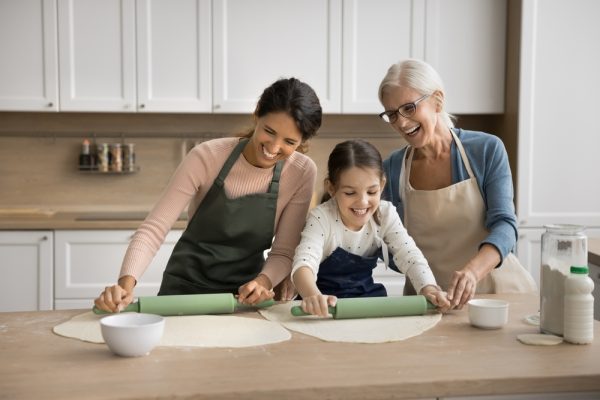
When my sister and I were very small, we lived in our parents’ hometown. Grandparents, aunts, and uncles were just a few minutes away at any given time. My mother used to recount her weekly grocery shopping trips with little ones in tow – and her own mother alongside, helping with us, the carts, the coupons, the whole process. At least once a week, my grandmother would also cook dinner for my parents, part of a standard Sunday round of “visiting” that included different relatives’ houses and various shared meals and cups of coffee and baby-holding.
From my grandparents’ steady involvement in mealtimes, I learned the proper way to set a table, that garlic powder is the secret to a tossed salad, and that a bowl of fresh fruit with a sprinkle of sugar applied while Mom isn’t looking is the perfect way to start the day. Dr. Anne Fishel and I have chatted recently about the value of grandparents (or, really, any older family member) to family mealtimes. As her two little grandchildren start to grow into the right ages to enjoy her energy and enthusiasm for kitchen activities like pretzel play or food coloring painting, I’m able to fondly recall making Belgian waffles with my own grandmother, braiding bread dough with my great-uncle, or constructing Raggedy Ann salads with my great-grandma. The patience and focus they could offer me during those activities was a gift my own parents couldn’t often provide in the busy flow of life. And the stories and recipes they shared during our time together gave me a sense of family history that I might not have otherwise fully realized.
Of course, engaging grandparents and older family members in dinner isn’t always full of hands-on help and sweet nostalgia. Despite the many benefits of sharing meals in adulthood, there are very real challenges that can arise as people age. I’ve experienced some of them firsthand, seeing my father start to turn up his nose at previously beloved dishes in favor of sweets, listening to my grandmother lose her ability to follow the thread of a dinner conversation, or watching my mother-in-law grapple with her desire to eat when she’s all alone at a table meant for many more people. To make sense of these changes – and learn how to help – we turned to Dr. Steve Wengel, Geriatric Psychiatry Division Director at the University of Nebraska Medical Center.
In this podcast interview with Dr. Wengel, we talk about the importance of shared eating experiences in older adulthood, as well as what families need to know about supporting their loved ones through all the age-related physical and cognitive changes that may impact family meals. We also talk about different ways grandparents can take an active role in dinner and food preparation, and share news about our new resources for families and caregivers of people with dementia. You can find those two new toolkits – one for families and one for memory care facilities – below.
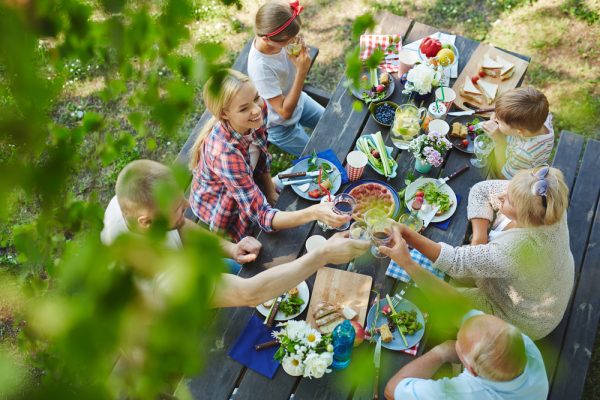
It’s picnic season! Check out our family picnic ideas to help you enjoy the slower pace of summer together.
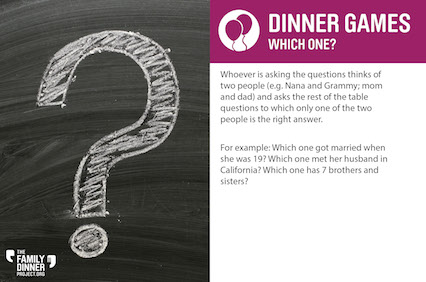
Having a multigenerational meal? Try a game like Which One to build a shared sense of family history!
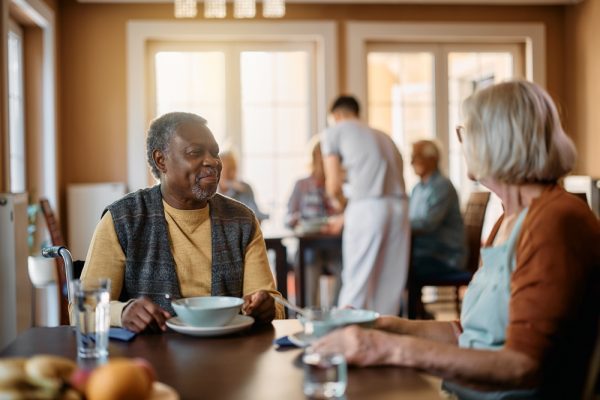
These conversation starters build on imagination and simple responses, so they’re perfect for adults with memory challenges.

