The older – and busier – my kids have gotten, the more flexible we’ve had to be about eating together. While family dinners are still a cornerstone in our household, now that my 17-year-old is out of the house at least four nights a week for sports practice, it’s gotten harder than ever to keep adjusting dinnertime to accommodate everyone. Lately, I’m finding that some of our best “family meals” aren’t really meals at all.
A smoothie break before homework; hot mulled cider and apple slices after a late evening practice; Sunday morning pastries from the bakery down the block. A text after school: “I’m heading home but I’m starving. Do you have a minute to make me that refried bean bowl like the other day?” That was my cue to set aside my work and not only make the snack, but wait for the data dump I knew was coming as soon as he walked in the door. (Teens are great at hinting when they want connection, not always so great at just asking for it.) We’re still finding moments every day to stop and share some food, fun, and conversation – sometimes during a family watch of the latest Ted Lasso – but it’s not always at dinner anymore.
The good news is, the research about family dinners doesn’t stop at dinnertime. The benefits families can gain from eating together are possible through any shared eating opportunity. When we engage in social eating with people we care about, including friends and co-workers, we’re boosting our sense of connection and teamwork. Worldwide research shows that eating any type of meal or snack with others contributes to our happiness. Shared meals at any time of day decrease loneliness, boost our mental health, and can make us more resilient, among many other benefits. Those gains don’t start and stop at the dinner hour. And they can also happen, in part, outside of the home: College kids eating with friends in the dining hall, school-aged kids sitting in the cafeteria, or even work colleagues spending dedicated time together for a meal or snack (like the Swedish fika, which offers a scheduled coffee and pastry break each afternoon).
So whether you, like me, are parenting busy teens and finding it hard to align your evening schedules; working opposite shifts from a partner and not able to sit down for dinner together; or rushing through carefully coordinated drop-offs and pick-ups that take a chunk out of the after-work hours, take heart. It doesn’t have to be dinner. Breakfasts, weekend lunches, and even snacks can be part of a regular family meal routine.
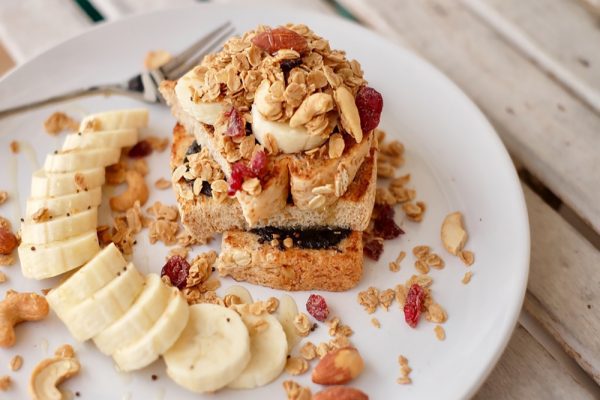
If snacktime is the best time to connect, make it count with these recipe ideas.
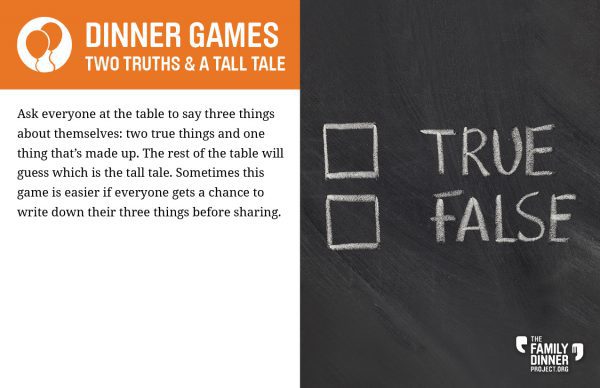
Get the scoop on each other’s day with a twist on Two Truths and a Tall Tale: Name three things that happened during the day, two of which are true, one made up.
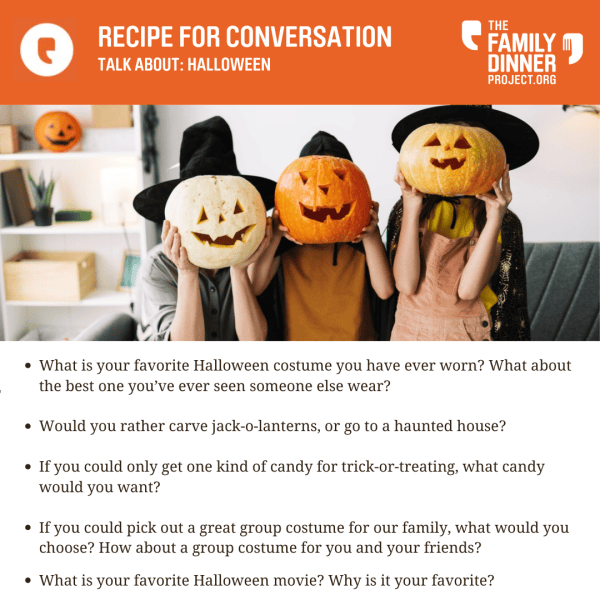
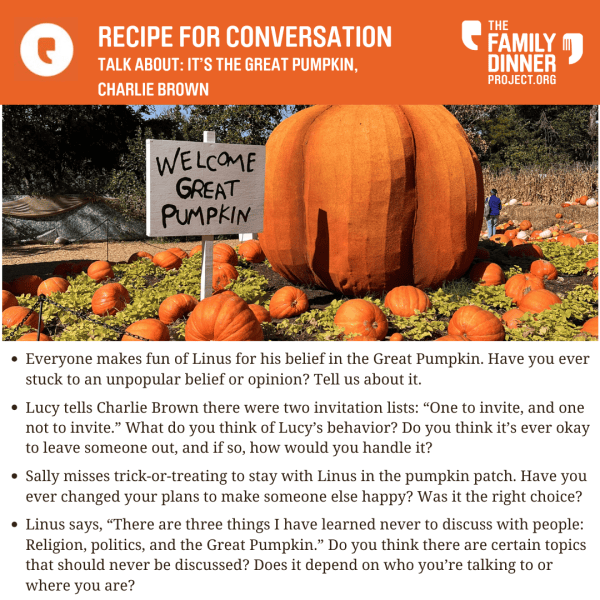
Halloween is coming! Try these sets of conversation starters for the big night.