

The first step to having more and better family meals is to make the commitment and stick with it. That’s certainly easier said than done! If you found your way here, you’re interested in making a change, but you probably need some help to make it happen. We’re breaking this week down into action steps to help you build your motivation and get your family on board with the program.
Where to Start?
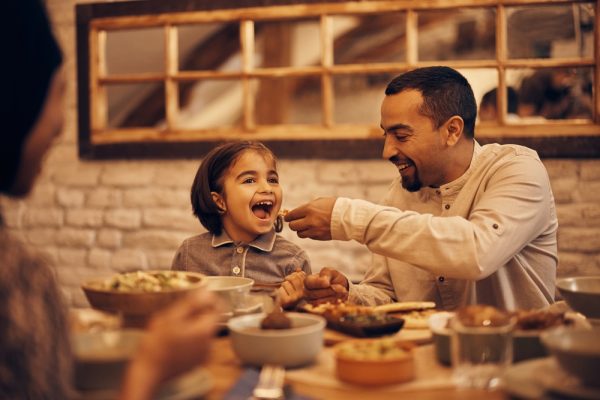
The best way to start is to…start! Have dinner together. It’s as easy as combining three essential ingredients: Food, fun, and conversation.
In our experience, families who want to start or improve a family dinner ritual are often held back by overthinking. There’s no one “right” way to eat together, or any “perfect” family meal that you need to duplicate exactly in order for it to count.
For your first few dinners together, we recommend choosing the most low-stress, high-reward menu you can think of. Maybe that’s takeout pizza, maybe it’s your kids’ favorite chicken nuggets or mac and cheese, or maybe you have a favorite recipe that always puts a smile on everyone’s faces. Whatever you choose, it’s best to keep things easy and reduce the possibility of tension or conflict over food. You’re trying to build a positive association with the dinner table at first, not challenge everyone’s palates or cooking skills.
To keep that positive association going, be ready with some conversation starters and easy games you can play while you eat. Download and print our cut-apart conversation starter slips, put them in a jar or bowl in the middle of the table, and let everyone take turns choosing one during your meal. And our fun page has lots of different games and activities, sortable by age group, that you can use to keep things lively!
Now that you’ve got the food, fun, and conversation under control, it’s time to work on your family’s motivation. We want one good family dinner to become a new, growing habit, and it’s likely that not every single meal together will feel easy or go as smoothly as you might expect. That’s normal, but it’s easy to get discouraged. Remembering why you want to keep trying, and having a game plan, will be important as you keep working towards the frequent, fun meals you’re striving for.
Step One: Find Your Why
One of the most important things you can do is to “find your why.” Why do you want to change your family dinners? Why are shared meals important to you? Why did you click on this program in the first place? Reminding yourself of the reasons behind your decision to work on improving dinnertime will help keep you motivated over the next four weeks – and beyond!
Let’s get started! Check out this video about the research-backed Benefits of Family Dinners.
- Did you learn anything new about why eating together is important?
- Was there any information in the video that surprised you or that you want to learn more about?
- Did any of the benefits described in the video feel like a good match for your family’s priorities?
- Is there anyone in your household that you might want to share this video with, to help them understand why improving your family dinners is important to you?
Reflection Time: What brought you here?
Fill in the blanks:
- If I could describe my feelings about family dinner in three words, they would be ______, ______, and ______.
- Ideally, the three words I want to be able to use to describe family dinner are _______, _______, and _______.
- I clicked on this program because I hoped it would help me/our family ______________________________.
Step Two: Get Your Family On Board
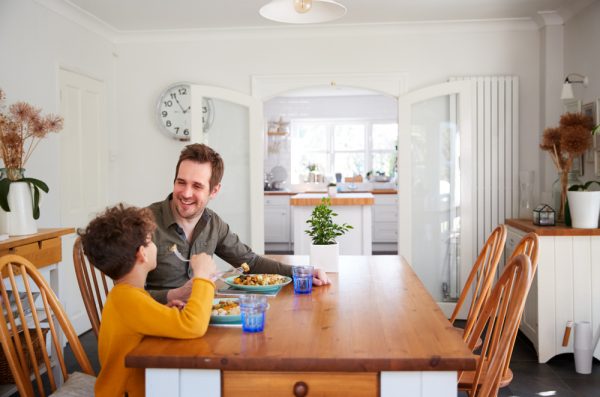
Family dinner means just that – the whole family has to get involved! Too often, the mental and physical workload involved in shared meals falls mostly on one person in the household. We want everyone to understand why you’re making this commitment, and to agree to take an active role in making things better.
You may have already taken the first step by sharing our Benefits of Family Dinners video with someone in your household, but if you haven’t, that’s a great place to start. The next step is to find time to talk about your goals as a family. And what better place to talk about your family dinner goals than at family dinner?
Pick a day for your “onboarding dinner” and make sure everyone will be there. If it’s helpful, you can try sending a calendar invite or a text reminder to family members with phones. Choose a day and time when you’ll have at least 20 minutes to sit together, eat, and talk.
Start the Conversation:
- What’s the best or funniest memory you have of eating together as a family?
- What do you like most about family dinners?
- What’s one thing you might want to change about our family dinners?
Ask for Input:
- Be sure to get everyone’s agreement! “We’re going to spend the next few weeks trying out some new ideas at dinner. Is everyone ready?”
- “We need to all work together on this! Here’s how everyone can help.” Or, you might ask your family, “What do you think you can do to help us have more frequent/fun/delicious family dinners?”
- “Thank you for the conversation. This was really helpful. I’m excited to try some of these ideas tomorrow/Friday/next week at dinner!”
Step Three: Set Your Schedule
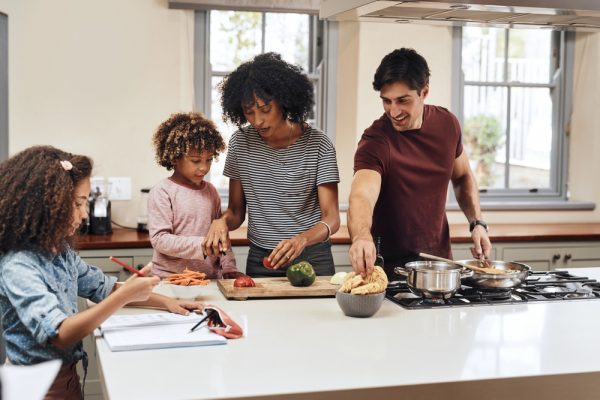
If your family is like most of the families we’ve met, this might be the trickiest part for you! But if gathering for regular family dinners is really difficult due to your busy schedule, don’t worry. You don’t have to eat dinner together seven days a week unless that feels like something you want to – and can – do!
Research shows that eating together more than three times per week is most likely to offer all the benefits of family meals, but every additional meal counts. While the nutritional benefits flow from how frequently you eat together, the social and emotional benefits come less from the number of meals and more from the quality of the time spent together. So if you currently don’t eat together often at all, even just adding one regular family dinner each week can be a great first step! We usually advise families to look at their current routine and “just add one” – one more breakfast, lunch, dinner, or intentional snack together every week, above what you currently do, is a good building block for future success.
How to “Just Add One”
- Eat together on a night you’d usually skip. If it’s because you’re out and about rushing to and from activities, try packing a picnic and taking 15 minutes to eat together on the sidelines, or having a special snack or dessert break together later in the evening when everyone gets home.
- Make takeout more meaningful. If you’re not having a family dinner because you’re too busy to cook, see how it feels to slow down and focus on your connection with one another over your takeout pizza or drive-thru meal. Ignore what you’re eating and just take the time to intentionally sit together, play some dinner games, or try some conversation starters.
- Try for breakfast, lunch, or brunch instead. It doesn’t have to be dinner! Our family breakfasts pack a lot of connection into less than 10 minutes together. Or you can make weekend lunchtime a little more intentional by remembering to all sit down together and set aside distractions while you eat.
- Tinker with timing. If it would be possible for your family to eat dinner at an unconventional time, it might be worth a try. Some families find it works well to serve dinner after school, when kids are hungry and evening activities aren’t yet in full swing. It’s not a solution that would work for many of us, but maybe it would be possible for you! Alternatively, some families might find it best to serve an early evening “mini meal” and then gather for a late dinner after sports practice or drama rehearsals are done.
- Split up as needed. It’s ideal to have everyone together for a meal, especially while you’re actively working on your dinner goals together; but that doesn’t mean it’s always practical. For example, families with toddlers and preschoolers often find it works better to feed the kids early, to allow for bath and bedtime. We recommend having at least one parent sit down and interact with them during that time. If you want to share a “meal,” try overlapping a course that serves as dessert for the little ones and a snack for the adult, like a fruit salad or yogurt parfait. As long as no one in your household eats alone, it’s fine to sometimes eat in smaller groups – and you can use some of our “split shift dinner” ideas to help everyone feel connected.
How did it go?

At the end of this first week, what’s changed for you? Did you enjoy a meal together, learn something new about the benefits of family dinners, or figure out how to “add one” to your usual routine? Whatever you’ve accomplished by being here, take a minute to pat yourself on the back. Getting started can be the hardest part!
Celebrate your success with a Walking Dessert, or maybe an Ice Cream Dance Party. You’ve earned a little extra family treat!
Week One Bonus Content:
- Wondering if the benefits of family dinner are actually because of the dinners themselves, not just the result of a close-knit family? Check out our podcast episode Is it the Family, Or the Dinner?
- Family dinners are good for our mental health and well-being in many ways, but even we were surprised by the latest global research showing that eating with others makes us happier. Learn more about those findings in our podcast conversation with researcher Micah Kaats of the World Happiness Report: Does Family Dinner Make us Happier?
- Looking for a quick cheat sheet to help you fit dinner into your hectic schedule? Check out Tips for Busy Families
- Bogged down by the endless cycle of practices and games that always seem to happen at dinnertime? Find tips and expert advice in our special section on Youth Sports and Family Dinners.
- Need to gather everyone for a morning meal instead of dinner? We have food, fun, and conversation ideas you can pull off in under 10 minutes: The Family Breakfast Project.
- Just starting out together? Family doesn’t have to mean adults with kids. Get ideas and tips to help you begin a dinner ritual as a couple in our special section, Family Starts with Two.
- Looking for step-by-step help with food, fun, and conversation? Check out our book, “Eat, Laugh, Talk: The Family Dinner Playbook” for 52 weeks of pre-planned recipes, conversation starters, and games, plus real stories from families who have changed their meals for the better!
 Introduction
 Make the Commitment
 Make it Work
 Make it Fun
 Make it Matter