Around this time last year, I spent a Saturday morning standing over the stove, making a triple batch of chicken and lentil soup. A close neighbor had lost her husband a few weeks earlier, and I noticed that the stream of visitors bearing flowers and food had disappeared after the first several days. Knowing how difficult it can be for a bereaved spouse to muster the energy to eat anything – let alone prepare a healthy meal – I wanted to bring a big jar of nourishing soup across the street to ease the burden a little bit.
At the same time, a friend had just started treatment for cancer, and although her husband was cooking and cleaning and tending to her needs, I knew he would also benefit from a break. I got out more jars, ladled more soup, and drove across town for a brief but meaningful visit to look in on them both. That one morning of tending a big pot of comfort food lifted not only my friend’s and neighbor’s spirits, but my own. It was one of the most rewarding days I’d had in a while.
Making or sending food isn’t just a kind gesture. Food is a universal thread that connects us all, and sharing meals is an almost instinctive part of human nature that helps us strengthen our bonds and build community. I can think of so many recent examples that demonstrate how food has served as a bridge to help me, and others in my community, reach out: The delivery of soup, bread, and desserts my choir organized for a member whose wife was going through a lengthy medical journey; the fresh-baked cookies I had delivered to the same friend mentioned above, when she couldn’t receive visitors or leave the house due to immunosuppression but lamented her craving for sweets; the gift card to a gluten-free restaurant I sent a newly widowed friend whose young son had just been diagnosed with Celiac disease; the pumpkin streusel muffins I baked last week to bring my son at his college’s Family Weekend. Each time, the act of choosing or cooking was a deliberate way to say “I see you, and I care about your needs.”
Dr. Anne Fishel had her own recent experience with gifts of comfort food after a surgery, and she’s got great tips and ideas to help organize the perfect way to communicate your concern through food. Whether you’re preparing for cold and flu season, helping set up a meal train for a friend in need, or just looking for even more ways to spread much-needed kindness and compassion right now, I hope you’ll be inspired to share some comfort food with friends and neighbors.
Food

One of the best ways to offer homemade comfort food is to choose things that freeze or store well, so your loved ones don’t feel pressured to finish everything immediately. Here are just four super-comforting recipes you can use to help stock their pantry or freezer.
Butternut Squash and Pear Soup
Fun

Personalize your gift of food even further with this sweet Message in a Bottle activity!
Conversation
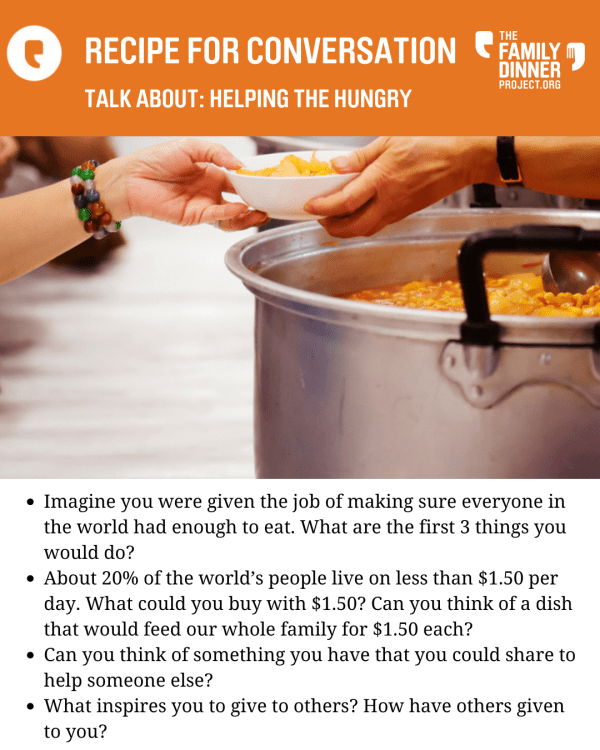
In the spirit of feeding our communities, we recently interviewed Dr. Lauren Fiechtner of the Greater Boston Food Bank on our podcast. You can listen to the episode below, then try these conversation starters to spark more ideas for ways your family can help others.
Listen to Episode 13: Tightening the Belt