
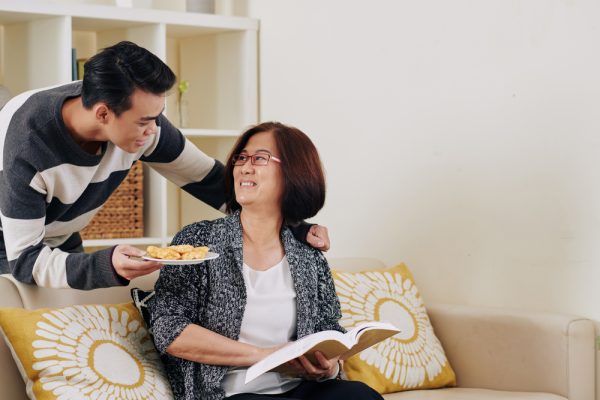
Cooking for others when they need comfort — after the loss of a loved one, a divorce, a long or debilitating illness, post-surgery, or just a terrible, horrible, no good, very bad day — is a tangible way to give a hug and to express your wishes for healing.
But these foods can be very personal, culturally specific, and imbued with deep childhood memories. It may not be so simple to know what foods to give when a loved one needs a cozy meal to bring cheer and solace. One person’s preference for macaroni with cheese and bacon may be quite repugnant to someone who craves a piece of salmon with miso sauce. Do you load up on protein to promote muscle healing, make an attempt at a culturally significant dish to remind them of home, try to replicate their favorite meal, or surprise them with something delicious but unexpected?
Comfort foods are somewhat different from invalid foods, which are the ones we want when we have a cold, a flu, COVID, or a stomachache. There is certainly overlap, but what’s good for the soul is much more individual than what’s good for the body. Years ago when I interviewed folks from all around the globe about invalid foods, there were some universal responses to what was regarded as curative when a person was under the weather: Over and over, I heard about the generous use of spices, known for their antibacterial properties, and various spins on chicken soup, made with rice, noodles, or lentils. But, when it comes to comfort food, preferences are as unique as the movies we like to re-watch or the songs we sing to our babies.
After my own surgery this summer, I was out of commission for a few weeks as chief cook. My husband’s cooking skills have atrophied over the years as we’ve settled into an efficient division of labor where I cook and he cleans up. (Since I cook like a whirling dervish, this is usually a very even split.) I didn’t want to press him to pull out cookbooks and refresh his cooking skills during my convalescence because I knew he’d be busy taking care of me in other ways. But I didn’t want us to go hungry either. These were some of the strategies I considered. Some didn’t fit, but others helped bring me back to health.
Different Strategies for providing Comfort Foods
- Creating a meal train
A friend offered to set up a meal train for me, but I pictured a parade of lasagna and chocolate chip cookies, which would be delicious, but I knew wouldn’t be the foods that would nurture me. This can be a great gift to a friend who is going through a long recovery or bereavement, but since these foods are so specific, the recipient really needs to be contacted ahead of time about what kinds of meals they would prefer, what time they want them delivered, whether they want no contact or a visit with the food, and whether they need to return the containers the food arrived in. This level of planning and organization seemed daunting to me, so I looked for other approaches. - Self-cooking
I figured that no one should know better than me what I’d feel like eating after my surgery, so a week ahead of time I did a cooking blitz that would sustain me and my husband for several days. I froze double batches of a red lentil stew, chicken meatballs, a rice and chicken congee, and a roasted squash and apple soup. As I was cooking, I realized that these were the same meals I had prepared for my son and daughter-in-law after the births of their children. - When someone asks how they can help, say yes!
My brother-in-law, who was once a professional chef, offered to make me some post-surgery meals, an offer I happily accepted. He sent me several possible dishes he could make and asked me to choose two. It was hard, but I picked a sweet potato soup with a crunchy topping and mushroom barley stew. He made double portions, so I could eat some immediately and freeze the rest. To have something healthy and nutritious in the moment and know there was more waiting for me, was a real bonus.
One of my oldest friends made a double batch of Chicken Marbella, which was the same meal she had made for me after the birth of each of my two sons, decades earlier. Feeling connected to such a joyful time in my life added an extra dollop of uplift to my spirits. - Being open to surprise and delight
Even without a formal meal train, my sons and several friends provided food that was delightful and unexpected. One set of neighbors, both doctors, brought over a big container of fresh fruit, cut up into bite-sized pieces that I could dip into around the clock.
Bri, my FDP team member, sent a half dozen containers of Jenni’s ice-cream with flavors I’d never heard of, but were deliciously surprising. They arrived dramatically in a big package with dry ice and were also a big hit with my husband.
My sons sent care packages filled with snacks from their favorite neighborhood New York City stores that they knew that their father and I would enjoy–candied nuts, crackers and cheese, chocolates, olives which we could eat between meals. - If you live far away
If you have a friend or family member who lives too far away to cook for, there are several options — meal delivery companies, specialty nut stores, bakeries, or national soup factories. You might also want to send a gift card to a local restaurant that delivers food.
My sister, who lives across the country, sent me a week’s worth of meals from a prepared food company that could all be frozen and then heated up in minutes. Even though she couldn’t be there, I felt connected and loved whenever I popped a pot pie in the oven. Her husband made his signature granola which has winged its way across the country for holidays and comfort countless times and never lasts long. Other homemade foods that can be shipped include spiced nuts, brownies, jams, and breads.
Sometimes being side-lined by an illness or surgery can have an upside. Feeling comforted by food provided by friends and family was certainly the main perk of my recovery. I’d be lying if I said I wasn’t a tiny bit disappointed when I was strong enough to be back in the kitchen again.
 Anne Fishel is an Associate Clinical Professor of Psychology at the Harvard Medical School and the Director of the Family and Couples Therapy Program at Massachusetts General Hospital. She has lectured and written about the benefits of family meals.